Co-Design & the Seven Generations Principle in Nonprofit Planning
I was sitting at my desk when I opened a draft of the strategic plan our consultant had sent over. It was tied up with a nice little bow. And I remember just sitting there thinking: what does this actually mean? What are we actually going to do with this?

The pivot
The board approved it. Going in, I’d asked how much detail was expected in our strategic plan, and they felt what we had met their expectations. One of our staff even suggested it felt quite generic. Once it was approved, the work turned to implementation. And because we hadn’t identified enough specifics — not that there weren’t any, just not enough — when I went back to the board asking for a meeting to help prioritize what was in the plan and how we wanted to roll it out, there was a lot of confusion. They seemed to think that was my work to do. And I didn’t feel I had enough to work with. On one piece especially — better governance practices — I needed more from them than what was there.
It left me feeling like, without more work done as a team, incorporating everyone’s input, we were still headed to a place where one person would end up making most of the recommendations, which the board would then approve, maybe with a little change. And that one person would have been me. I didn’t feel I had what I needed to articulate something that was actually going to resonate with the people it needed to.
The pattern
In my previous roles as executive director, I found myself too caught up in the day-to-day operations to approach things like strategic planning with the true engagement of community that I honestly believe is necessary — necessary if the organization and the programs being offered are going to meet the needs of the intended beneficiaries and contribute to a more sustainable community and world.
When I say sustainable, I don’t just mean environmentally. Even the UN’s own Sustainable Development Goals frame sustainability as the interaction of economic, social, and environmental wellbeing together — not climate on its own.
So we took shortcuts. We engaged staff and board, but we relied on our knowledge and our documentation of feedback from community members. This certainly helped us capture what we understood to be needed and guide the direction of our planning, but it did nothing to create buy-in from community, or to ensure the approach actually met the needs of our participants or members. We came up with a great strategic plan for a three-year period, and members and participants agreed with it — but it lacked the kind of contribution from those who needed it most. Getting participation in the activities that stemmed from the plan was hit or miss. The plan had little depth, was too short to build the longer term sustainability I value, and ultimately the work required to keep up the momentum was probably more than if we’d invested the time and energy required to co-design our strategic plan in the first place.

Successful co-design requires true engagement with the community being served at every stage — including gathering data about our past and what our ideal sustainable future looks like. But it also means keeping community engaged throughout the entire process, right up to and during implementation, evaluation, and planning next steps.
I’m done with shortcuts. I’m done with doing for and to, rather than with.
Naming where I stand
I’m a white settler woman. I grew up in an Anglophone, middle-class household. While I live with chronic pain, I’m able-bodied, and I did not experience the kind of generational trauma that my peers who are Indigenous or African Nova Scotian did. I have a university education, which has offered me privileges I can count on in many contexts. This is a lens I experience life through, unless I consciously seek out other perspectives.
I am an Anglophone white settler, fourth and fifth generation Canadian. My roots come from impoverished people of the British Isles, primarily, who came to Canada dreaming of a better life. We settled various parts of Canada after Confederation had taken place, in areas that had primarily been settled by white Europeans.
The throughline
When I consider co-design and regenerative leadership, I’m also drawn to the values of Indigenous ways of knowing and doing — ways that incorporate knowledge of what past generations have experienced, where we come from, and what we want for future generations, while considering where we are right now. This is more than identifying our values and ideals. This is determining what needs to change, and how to get where community wants and needs to go.

None of the traditions I’m drawing on here agree on method. What they agree on is that you can’t skip the gathering. Netukulimk, the Mi’kmaw principle of taking only what the land and water can sustain for those who come after, isn’t a limit you calculate once — it’s a practice of continuously gathering knowledge, across generations, before deciding what’s enough. The Haudenosaunee Confederacy’s own founding wasn’t one nation’s idea handed down; the Great Law came from bringing distinct nations’ perspectives together, deliberated collectively, long before anyone called it stakeholder engagement. Closer to home, a Canadian civic toolkit drawing on that same teaching states its own method plainly: inviting multiple perspectives and active participation at every stage of a project, not just at the start. And the practical, secular side of co-design says something close to the same thing in a different register — a facilitation framework built specifically so no one is allowed to jump to solutions before the room has genuinely shared perspectives and found common ground first.
So who is at the table — from vision, through concept and design, to promotion, implementation, and evaluation? Who is at the table? Who gets left out? Who needs to be included?

This place, these relationships
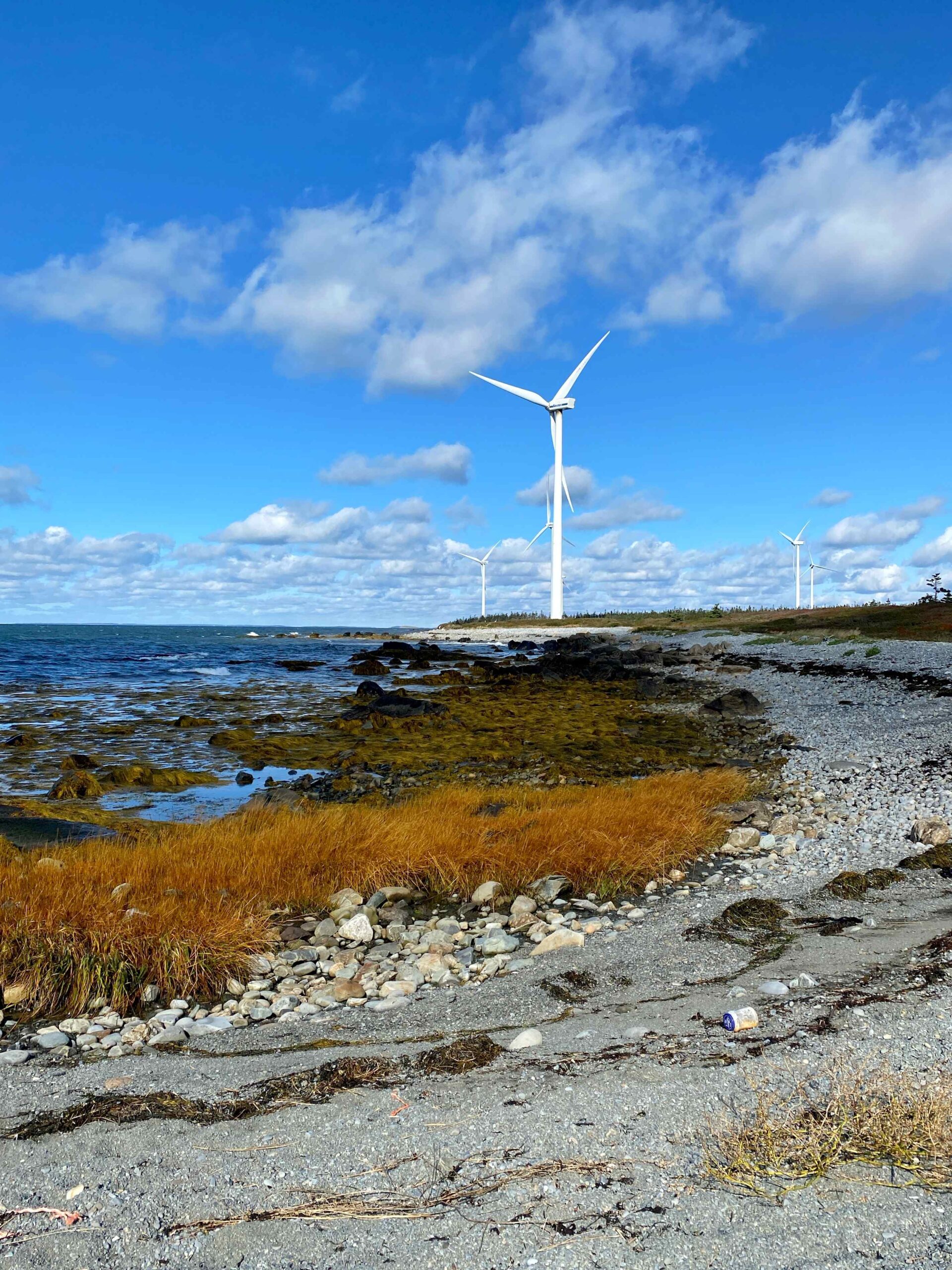
I live in an interesting region of Mi’kma’ki. There are First Nations. There are many Indigenous peoples who live “off reserve.” We have a historic African Nova Scotian community, established by Black Loyalists more than 200 years ago. And my home is in a historic Acadian village, established by French settlers in 1653, the British expelled its inhabitants during the deportation, and some of those same Acadian families resettled it when the British allowed them to return roughly a decade later. Our region continues to evolve as newcomers migrate here from all over the world and make this home.
Of those communities, my relationship with the Acadian community is the strongest — my children are Acadian, my spouse is Acadian. I’m often one of the first people to bring up Acadians when we’re talking more broadly in provincial conversations, where the work of truth and reconciliation and decolonizing so often centers Indigenous and African Nova Scotian communities alone, and I’ll say: I think we’re forgetting another community here. While the French were colonists, the Acadians were displaced and they share the legacy of generational trauma inflicted by the British. I can speak to the Acadian experience with a depth I can’t yet speak to the others.
I’ve done a little more work with the African Nova Scotian community — during my social work degree, I worked on a research project, led by the African Nova Scotia Dean of Social Work, drawing on a study of the social determinants of health for African Nova Scotians in rural Nova Scotia. So there’s some grounding there, even if it isn’t relationship in the fuller sense.
My biggest gap in knowledge and relationship is with the Indigenous community — though honestly, it isn’t all that different with the African Nova Scotian community either. I have relationships with both, but not substantial enough that I can easily invite authentic participation and contribution from people in either community into the work I’m involved with. I haven’t formed enough connections to readily learn from either community right now.
So — it’s definitely an area I need to work on. Actually, I don’t want to say it that way. I want to be really thinking about those relationships, and about the fact that I need to build stronger ones with people who identify with these communities.
I’ll admit something else here, since it applies directly to this post: most of what I know about the Mi’kmaw and Indigenous teachings I’ve drawn on above, I know from reading, not from relationship. I’m working from written sources because the relationship is in development — not because it wasn’t the right place to start.
As well-meaning and as fully aware of the need to engage the community I live and work in as I am, without making the time to build relationship and learn from everyone who makes up that community, I have failed to develop a sustainable program, organization, and community that includes everyone.
The funding problem
There are several issues with doing things the way we’ve always done things. And there are plenty of reasons why we do. One of the biggest is how we fund the work that we do. Grant cycles and funding requirements often create the very environments we need to move away from. Chasing grants usually means short timelines for the work itself, and often comes with parameters that attempt to define the scope of the work — neither of which creates the conditions for sustainability.
What it takes instead
So how do we change this? Community work, systems change, and sustainability all require a common element, starting with our values — values that embody self-determination, power sharing, accountability, and reciprocity. When we genuinely work together toward a common good, we’ll find the impact in community to be greater and longer lasting.
Start local
Even as we work toward the kind of systems change all of this points to, I think we have to start local — with our own community — and in doing that, keep asking what our community’s impact is on the broader world we’re all part of.
Ending
I think about that consultant’s plan again, tied up with its bow, and about all the community feedback that had gone into it before it ever reached my desk. People had been at the table — at the very first stage, when we were gathering input. What they weren’t at the table for was what came next: deciding how we actually used that input, what we prioritized, what further questions we needed to ask. Being heard once isn’t the same as being engaged throughout.
So I’ll ask you what I wish someone had asked me back then: in the work you’re part of right now, where did community get to speak once — and where do they still have a seat, today?
Relationship, not extraction. Collaboration, not competition.
Want to learn more?
Canadian sources prioritized; Hardman first regardless, as the course that started this.
- John Hardman — Leading For Regeneration: Going Beyond Sustainability in Business, Education, and Community; The Regenerative Leadership Handbook
- Netukulimk — Unama’ki Institute of Natural Resources; L’nuey, on co-management
- Haudenosaunee Confederacy: Confederacy’s Creation (primary source); Indigenous Corporate Training Inc.: What is the Seventh Generation Principle?
- Seven Generations Education Institute: Seven Grandfather Teachings (Anishinaabe)
- Deborah McGregor — Traditional Knowledge and Water Governance: The Ethic of Responsibility
- Evergreen Canada: Teaching — Indigenous Principles for Civic Collaboration
- Tamarack Institute — Facilitating Co-Design Virtually: Part 1 · Part 2 · Part 3 · Part 4
- Sanders & Stappers: Co-creation and the new landscapes of design; Beyond Sticky Notes: What is co-design?
Trish McCourt, RSW is a consultant supporting non-profit/community organizations with leadership transition, organizational development, and advocacy. She has spent over 30 years working in community services, including eight years in strategic leadership with nonprofit organizations in Nova Scotia.
Drop me a comment below and/or follow one of my social media channels.